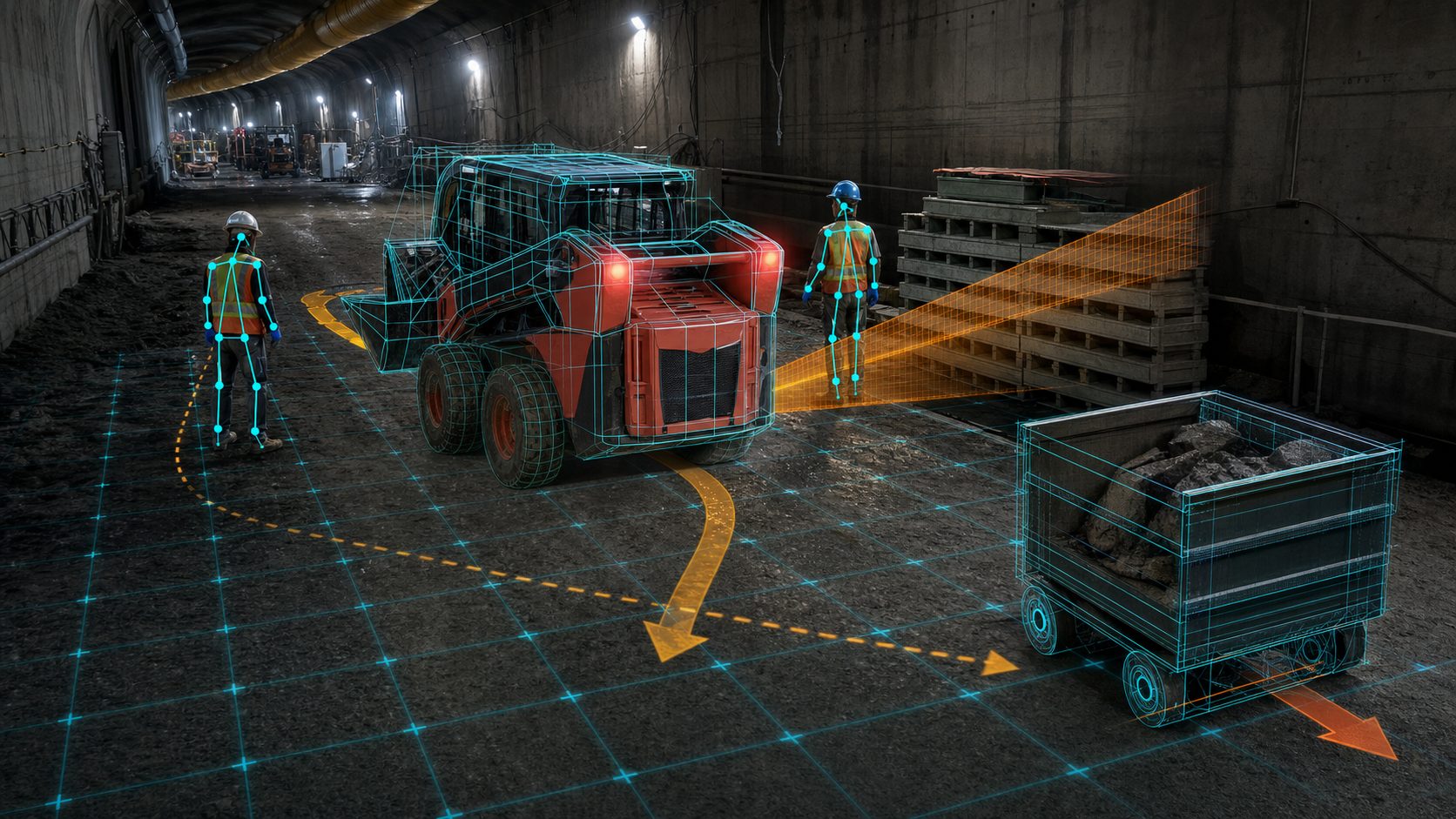
That single engineering philosophy shapes the entire stack. EdgeOS runs the autonomous, millisecond-scale safety loop on site hardware; the Cloud Core turns its signed event stream into compliance evidence, business intelligence and insurance leverage. Neither ever waits for the other.
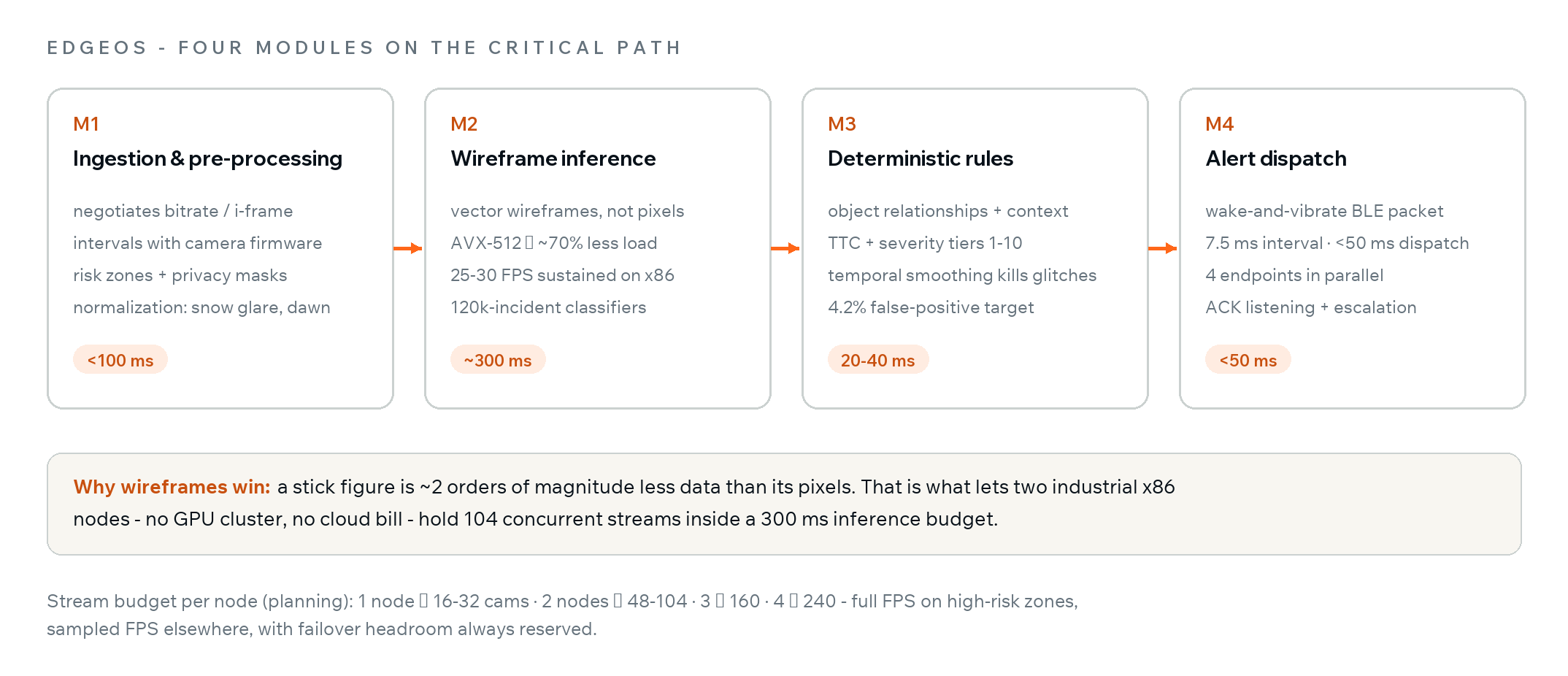
Deployed across the redundant edge node pair, EdgeOS is responsible for the millisecond-by-millisecond processing of 104 camera feeds - engineered for low latency, high throughput and fault tolerance. Four modules sit on the critical path.
The Cloud Core - the SaaS platform at the heart of every subscription - is where safety data becomes business intelligence, insurance leverage and legal defense. Below: the risk analytics dashboard as a superintendent sees it.
Illustrative interface mock - populated with the metric types the platform reports.
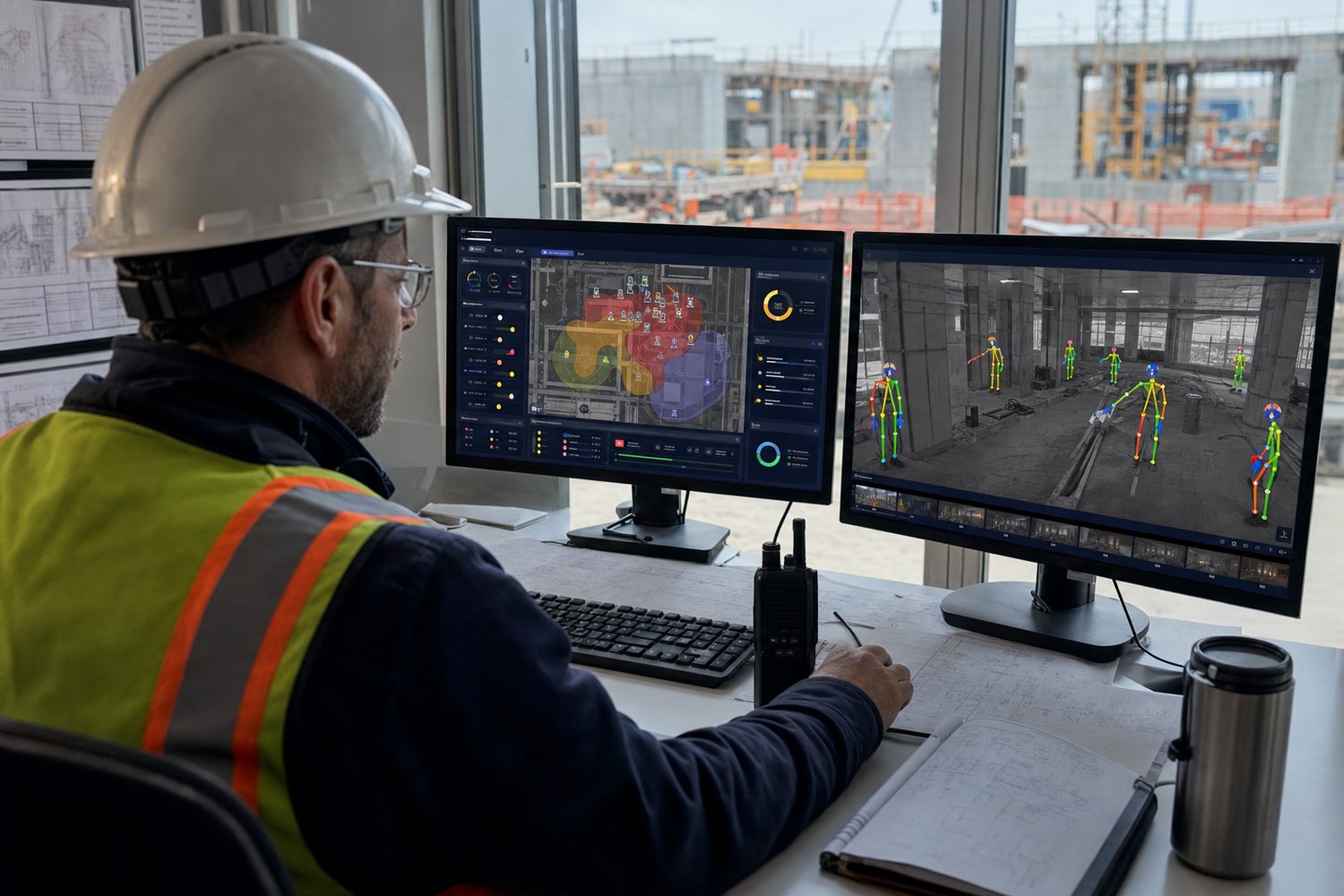
Millions of position data points aggregate into risk heat maps that expose layout flaws - like a walkway that funnels workers through a machine path - so superintendents redesign the site before an incident, not after.
“PPE violations spike on Friday afternoons.” Historical patterns suggest targeted safety talks against specific drifts - coaching aimed by evidence, not anecdote.
OTA firmware, security patches and model improvements push remotely - detection accuracy improves continuously without a site visit. A camera drop or a node on UPS power opens a support ticket the moment it happens.
Every detected event is automatically tagged against the specific regulation it engages. A “worker near edge” event isn’t just a clip - it is categorized under the applicable fall-protection provision of O. Reg. 213/91, creating an instant, legally referenced log across 147 Ontario OHSA-related duties, regulatory provisions and internal safety-control requirements, with WorkSafeBC and CNESST modules in development.
Daily and weekly reports generate in inspector-ready format - an estimated 80% reduction in administrative labour. Every record carries the video clip reference, wireframe metadata, NTP-synchronized timestamp and the cryptographic signature generated at the edge: an immutable chain of custody for liability defense.
TRIR counts injuries after they happen. These metrics measure the hazards that didn’t become injuries - the difference between proving harm and proving prevention.
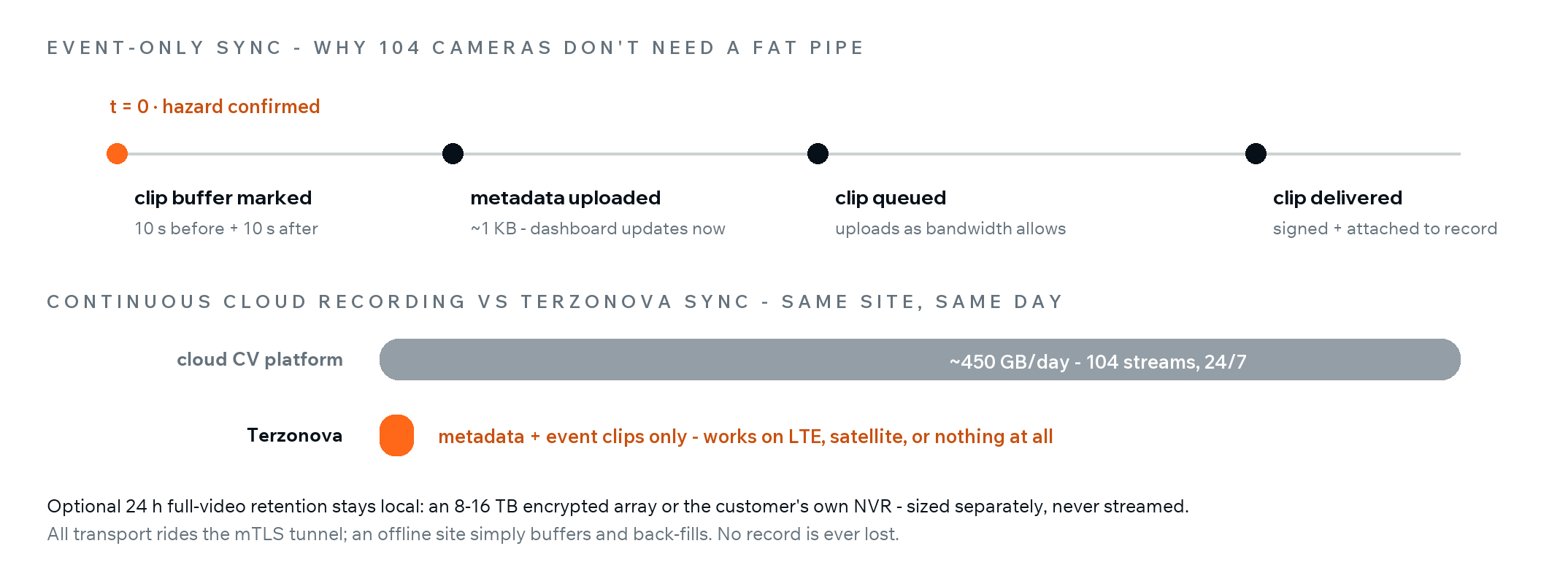
Construction backhaul is often LTE or satellite - expensive and unstable. So Terzonova never streams 24/7 video to the cloud. The sync protocol is event-driven, ordered for usefulness, and tolerant of outages.
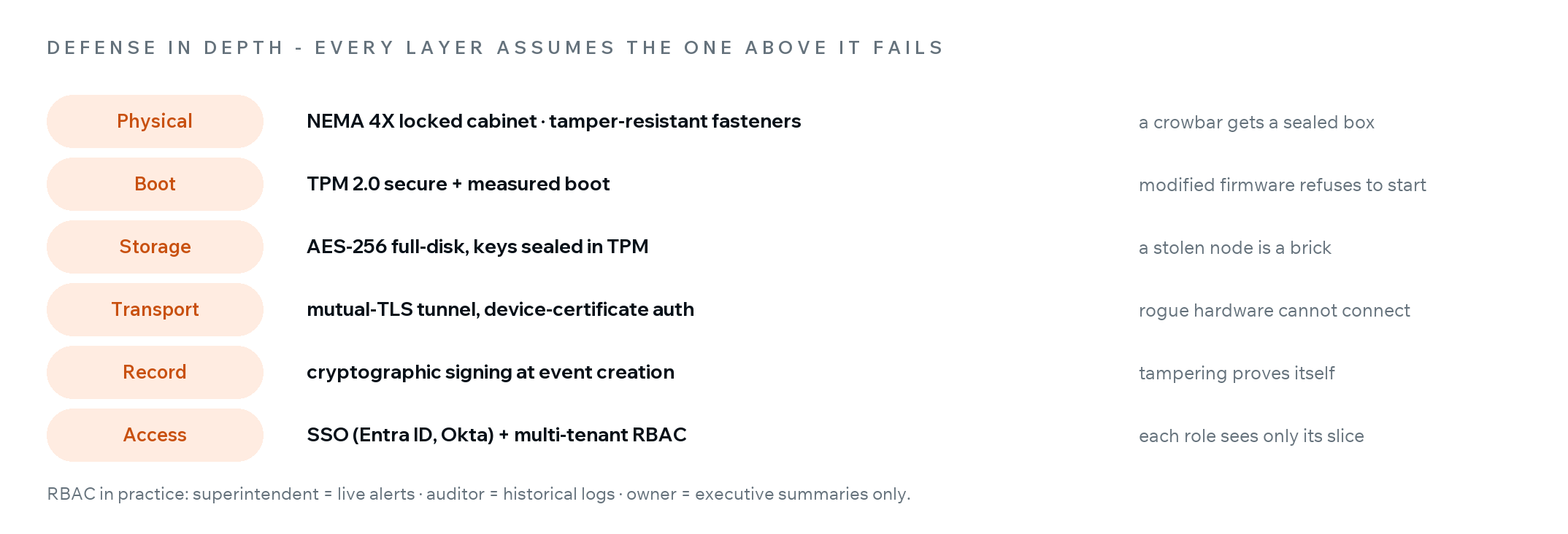
A safety platform is only as credible as its worst failure mode. The stack assumes hostile conditions at every layer - physical theft, tampered firmware, rogue devices, insider edits - and defeats each one structurally.
Alerts, dashboards, reports and training materials ship in English and French - a requirement for Quebec’s CNESST market and an advantage on every multilingual crew in the country. Provincial localization goes deeper than the interface: the rules engine’s compliance modules localize the regulatory logic itself, with adaptation to CSA Z259 (fall protection) and Z462 (workplace electrical safety).
Patent applications in preparation cover the wireframe hazard detection method (vector data over full-pixel density for sub-500 ms latency), the end-to-end wearable alert pipeline, and real-time alarming in constrained-bandwidth environments. Trade secrets protect the risk classification system, incident-weighting algorithms, training-data augmentation and edge optimization methods - under NDA discipline across every employee, contractor and partner. TERZONOVA trademark filings are under way in Canada with U.S. filings planned; source code, UI designs, SDKs and annotated datasets are protected by copyright.
Whether you are a contractor exploring a pilot, an owner setting safety standards, a broker looking for risk-engineering data, or an investor who wants to learn more - our team is ready to assist.